
WELCOME BONUS 300%
UP TO €2000 + 100
FREE SPINS
UP TO €2000 + 100
FREE SPINS
Home → Blackjack
Blackjack at Casino Spinanga: Variants, Rules and Payouts
Early Surrender is removed from many tables
The standard Infinite Blackjack table at Casino Spinanga operates with 6 decks and does not offer the Late Surrender option. This exclusion increases the house edge by approximately 0.08 percentage points compared to tables that allow players to forfeit half their bet after the dealer checks for blackjack.
In contrast, the dedicated Blackjack Surrender variant explicitly includes this rule, allowing a player to lose only 50% of the wager in specific losing scenarios. The inclusion of Late Surrender improves the Return to Player rate by roughly 0.08 percent, whereas Early Surrender, which is far rarer, can improve odds by up to 0.6 percent.
Without the ability to surrender, players must rely strictly on basic strategy to minimize losses over the long term. The absence of this safety valve means that marginal hands result in full loss rather than a partial refund, directly impacting the overall expected return.
What a Natural Blackjack Practically Pays Out
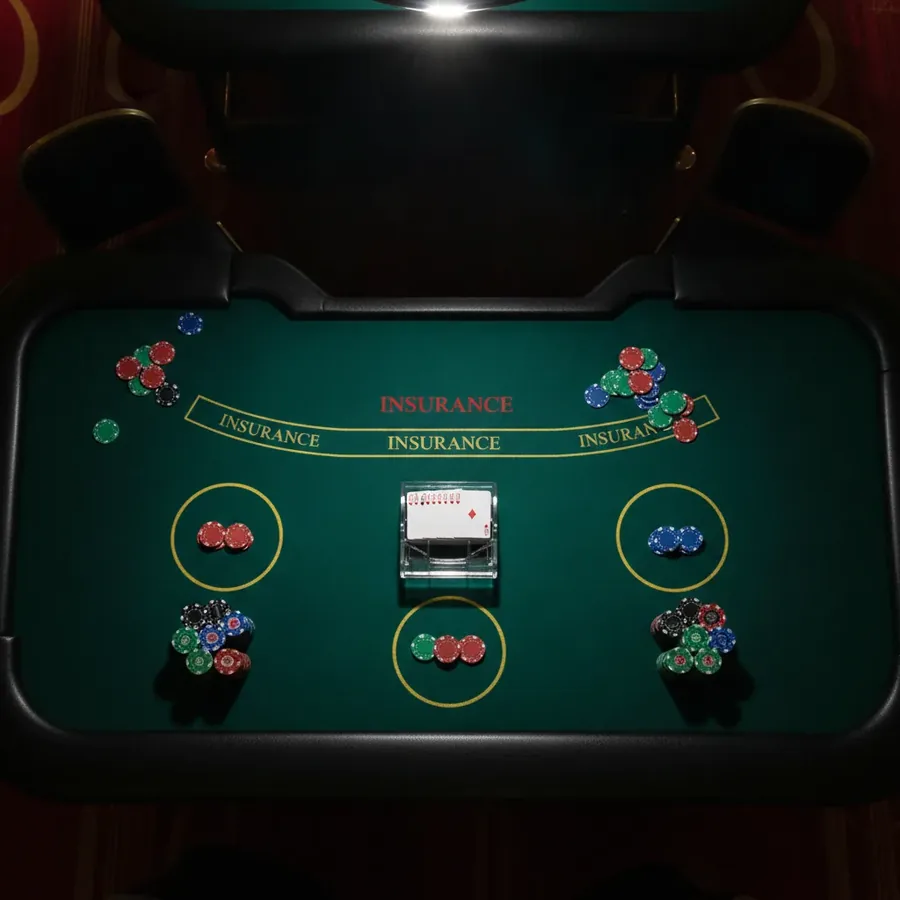
The Infinite Blackjack game at Casino Spinanga pays out natural blackjacks at the standard 3:2 ratio. For every 100 euros wagered on a winning hand, the player receives 150 euros in profit, maintaining the traditional payout structure found in most regulated markets.
This 3:2 ratio is critical because alternative payouts like 6:5 significantly degrade the player's mathematical advantage. Switching to a 6:5 payout adds exactly 1.39 percentage points to the house edge, reducing the RTP from approximately 99.47% down to 98.15% for the same six-deck game.
The Quantum Blackjack Plus Live table also adheres to the 3:2 payout for standard wins before applying multipliers. While side bets and quantum multipliers can boost returns up to 1,000x, the base game maintains the favorable 3:2 ratio for natural hands, ensuring the core strategy remains viable.
Blackjack Contributes Only 10 Percent to Wagering
The 300% welcome bonus up to 2,000 euros comes with strict contribution rates for different game categories. Table games, including all live dealer blackjack variants, contribute only 10% toward the wagering requirement, unlike slots which count for 100%.
For a 2,000 euro bonus, the total turnover target is calculated based on the maximum allowed withdrawal limits, but the slow contribution rate extends the playtime significantly. Players must wager 20 times the bonus amount, meaning 40,000 euros in slot play equals the requirement, whereas blackjack requires 200,000 euros in bets to clear the same bonus.
This 10% contribution rate makes clearing bonuses via live dealer tables mathematically inefficient for most bankrolls. The low weighting effectively penalizes players who prefer the lower house edge of blackjack, as they must risk substantially more capital to meet the same promotional conditions.
Four hours of play with 300 EUR bankroll
Starting with a 300 euro bankroll on the Infinite Blackjack table, a player faces a minimum bet of 1 euro and a maximum limit of 5,000 euros. With an average bet of 10 euros per hand and a typical speed of 60 hands per hour, the total action volume reaches 2,400 euros over four hours.
The theoretical loss over this session is derived from the house edge of 0.46% on the standard Infinite Blackjack ruleset. Multiplying the 2,400 euro turnover by 0.0046 results in an expected loss of approximately 11.04 euros, leaving a projected remaining balance near 288.96 euros.
However, volatility can cause significant deviation from this mean, potentially depleting the 300 euro stake much faster if a losing streak occurs. The high variance inherent in card games means the actual outcome may differ substantially from the statistical expectation over a short four-hour window.
Register Late Surrender correctly in three steps
Step one involves identifying whether the specific live table supports the Late Surrender rule during the betting phase. Players must check the game rules overlay or the provider information, as Evolution's Infinite Blackjack does not include this feature, while the dedicated Surrender variant does.
Step two requires waiting until the dealer reveals their hole card to confirm there is no dealer blackjack. If the dealer holds a blackjack, surrender is not permitted regardless of the player's hand strength, and the hand is settled immediately according to the initial deal.
Step three consists of selecting the surrender icon to forfeit half the original wager and retrieve the remaining fifty percent. This action is only valid when the player holds a weak hand against a strong dealer upcard, such as a ten, maximizing the mathematical benefit of the rule within the game constraints.
Blackjack variants at a glance
| Variant | Payout | House edge | Rule | Bet range |
|---|---|---|---|---|
| Blackjack Surrender (Late Surrender) – Regel-Effekt | n.a. (Regel-Modifikator) | −0.08 Prozentpunkte | Spieler gibt Hand nach Dealer-Blackjack-Prüfung auf, verliert die Hälfte des Einsatzes. Verbessert RTP um ca. 0.08 Prozentpunkte. Early Surrender ist wesentlich wertvoller (bis −0.6 Prozentpunkte), aber extrem selten. | Rückzahlung 50% des Einsatzes |
| Blackjack Insurance / Versicherung (6–8 Decks) | 92.53% | 7.47% | Separate Nebenwette bis 50% der Hauptwette, wenn der Dealer ein Ass hat. Basisstrategie schreibt IMMER Ablehnung vor (außer Karten zählen bei True Count ≥ +3). Bei einem Deck Vorteil ≈ 5.88% | Insurance 2:1 |
| Blackjack Ein Deck, klassische Regeln, 3:2 | 99.85% | 0.15% | Weniger Decks = niedrigerer Vorteil; ein Deck gibt ca. −0.48 Prozentpunkte gegenüber 8 Decks. Oft durch 6:5 Auszahlung kompensiert. | Blackjack 3:2, Gewinn 1:1 |
| Blackjack Split / Double / H17 – Regel-Effekte | n.a. (Regel-Modifikatoren) | H17 +0.22 Prozentpunkte; RSA −0.08 Prozentpunkte; DAS −0.14 Prozentpunkte | Dealer Hits Soft 17 verschlechtert RTP um 0.22 Prozentpunkte; Resplit Aces verbessert um 0.08 Prozentpunkte; Double After Split verbessert um ca. 0.14 Prozentpunkte; 6 Decks statt 8 – ca. 0.02 Prozentpunkte. | Double – Einsatz ×2 mit einer Karte; Split – bis 4 Hände; Ass-Split meist mit einer Karte. |
| Blackjack Liberal Vegas Strip (liberale Regeln, 3:2) | 99.72% | 0.28% | Günstigste Regelkombination: S17 + DAS + Resplit + Late Surrender. Standardabweichung 1,15 | Blackjack 3:2, Gewinn 1:1 |
| Blackjack 6 Decks, S17, DAS, DOA, Auszahlung 3:2, Basisstrategie | 99.54% | 0.46% | Dealer steht auf Soft 17; Verdopplung auf jeder Zweierkarte; Verdopplung nach Split erlaubt; keine Aufgabe. Basisstrategie ist für diesen Wert zwingend | Blackjack 3:2, normaler Gewinn 1:1, Insurance 2:1 |
16 vs 10 played incorrectly: most common error
Playing a hard sixteen against a dealer ten is statistically the worst basic strategy decision in blackjack, leading to an immediate loss in the majority of outcomes. This specific hand configuration forces the player into a negative expectation scenario where hitting risks busting while standing guarantees defeat if the dealer makes a strong hand. The house edge on this particular matchup increases significantly compared to optimal play, eroding the bankroll faster than any other common mistake made by novice players.
The correct move for a hard sixteen against a ten is actually to surrender if late surrender is available, reducing the loss to fifty percent of the original wager. Without surrender, hitting is the mandatory action despite the high bust probability, as standing yields a lower expected value over thousands of simulated hands. This deviation from intuition aligns with mathematical optimization rather than emotional comfort, ensuring the longest possible survival of the gaming session under adverse conditions.
Surrender rules improve the overall return by approximately 0.08 percentage points in favorable game structures, making them a critical component of advanced strategy implementation. When late surrender is not offered, the player must accept the full risk of the sixteen versus ten confrontation without any mitigation options available at the table. This limitation directly impacts the theoretical return to player, shifting the balance further toward the casino and requiring stricter bankroll management from the participant.
Infinite Blackjack uses the Six Card Charlie
Infinite Blackjack by Evolution features a unique side rule known as the Six Card Charlie, which automatically wins any hand that reaches six cards without exceeding twenty-one. This exception overrides standard bust protocols, providing a significant advantage when drawing multiple low-value cards to build a total under the threshold limit. The presence of this rule modifies the base house edge, offering players a distinct benefit not found in traditional live dealer blackjack variants offered by other providers.
The minimum bet for Infinite Blackjack ranges from one to five thousand euros, accommodating both casual players and high rollers within the same streaming environment. Players can occupy unlimited seats at the virtual table, allowing for social interaction and shared observation of the dealer’s actions during each dealt round. This structure supports the infinite nature of the game, where new participants can join seamlessly without waiting for an empty chair to become available.
Side bets such as Any Pair, 21+3, Hot 3, and Bust It are available alongside the main game, each carrying its own specific payout table and house edge. These optional wagers increase volatility but do not affect the underlying strategy required for the primary blackjack hand resolution process. Understanding the interaction between the Six Card Charlie rule and these side bets helps players manage their bankroll more effectively across extended playing sessions.
Splitting Eights vs Standing on 16
Basic strategy mandates splitting a pair of eights regardless of the dealer’s upcard, transforming a weak sixteen into two potentially strong starting hands of eight points each. Standing on sixteen is mathematically inferior because it leaves the player vulnerable to dealer totals of seventeen through twenty-one, resulting in a guaranteed loss in most scenarios. This fundamental rule correction prevents unnecessary erosion of the bankroll caused by passive play in unfavorable situations during live dealer sessions.
The house edge for standard blackjack games typically hovers around 0.46 percent when using optimal strategy, but failing to split eights increases this disadvantage substantially. By splitting, the player reduces the average loss per hand compared to holding a static sixteen, thereby improving the long-term expected value of the betting sequence. This adjustment is crucial for maintaining profitability over thousands of hands played at tables with standard rulesets.
Resplitting Aces is often restricted to receiving only one additional card per ace, limiting the potential upside compared to splitting other pairs like eights or fours. However, the strategic imperative remains clear: never stand on a hard sixteen against a dealer ten or eleven, as the probability of winning is negligible. Adhering to this principle ensures alignment with the theoretical return percentages published for various blackjack variants available on the platform.
Continuous Shuffling Machine shuffles after each round
Live dealer tables utilize physical dealing procedures rather than digital random number generators, meaning cards are physically shuffled and dealt by human croupiers in real-time streams. While some land-based casinos employ continuous shuffling machines to prevent card counting, online live studios rely on manual shuffling between shoes to maintain game integrity and fairness. This distinction affects the effectiveness of tracking strategies that depend on deck penetration observations in brick-and-mortar establishments.
The Infinite Blackjack variant allows unlimited players to participate simultaneously, creating a dynamic environment where card distribution patterns may differ slightly from single-player digital versions. Each shoe contains a fresh set of decks, typically six or eight depending on the specific game configuration, ensuring randomness is preserved throughout the session. Players cannot predict future card values based on previous rounds due to the thorough mixing process employed by the studio staff.
Quantum Blackjack Plus Live by Playtech introduces multipliers up to 1,000x on three-card combinations totaling twenty-one points, adding a layer of excitement beyond standard payouts. These special features operate independently of the shuffling mechanism, relying on predetermined random outcomes applied to the dealt cards rather than historical data analysis. Understanding these mechanics helps players appreciate the technical infrastructure supporting the live gaming experience without expecting predictive advantages.
Blackjack Party runs with two hosts
Blackjack Party by Evolution creates a lively atmosphere with two energetic moderators who engage players through chat functions and commentary during the live stream broadcast. This format differs from silent dealer environments by incorporating entertainment elements designed to enhance viewer retention and social interaction among participants seated at the table. The dual-host setup ensures constant communication flow, keeping the energy levels high throughout extended gaming periods.
The betting limits for Blackjack Party range from one to one thousand euros, catering to a broad spectrum of player budgets and risk appetites. Unlike high-limit tables, this variant focuses on accessibility and fun, making it suitable for casual players who enjoy interactive experiences alongside traditional gameplay mechanics. The presence of multiple hosts allows for varied presentation styles and quicker response times to player inquiries or celebrations.
Side bets including Any Pair, 21+3, Hot 3, and Bust It remain available in this themed version, maintaining consistency with other Evolution blackjack offerings in terms of payout structures. The party theme does not alter the underlying mathematics of the game, ensuring that return to player percentages remain aligned with industry standards for similar rule sets. Players can expect familiar strategic requirements while enjoying the enhanced audiovisual production quality provided by the hosting team.
What Peek Means with a Dealer Ace
The Blackjack Insurance wager allows players to hedge against a dealer blackjack when the upcard is an ace, costing 50% of the original stake. This side bet pays 2:1 if the hole card completes a ten-value hand, effectively neutralizing the loss on the main bet for that round. Players must analyze the True Count carefully, as basic strategy dictates rejecting insurance unless the count reaches +3 or higher in multi-deck shoes. The house edge for this specific bet jumps to 7.47%, making it statistically unfavorable for long-term retention compared to standard play.
Infinite Blackjack by Evolution offers a dynamic environment where unlimited seats share a single dealer shoe, often utilizing six to eight decks for continuity. When the dealer reveals an ace, the insurance mechanic becomes critical for bankroll management across these high-volume tables with limits ranging from 1 to 5,000 EUR. The theoretical return for the main game sits at 99.47%, but adding insurance without a positive count drastically reduces the overall expected value. This structural setup requires strict adherence to base strategy to maintain the lowest possible house advantage during extended sessions.
Quantum Blackjack Plus Live by Playtech introduces quantum multipliers that can amplify wins up to 1,000x on specific three-card combinations totaling 21 points. While the base RTP remains strong at 99.57% with optimal strategy, the presence of an ace upcard triggers the insurance option independently of these multiplier events. Bettors must distinguish between the primary hand outcome and the side bet resolution, as the insurance payout does not interact with the quantum modifiers. Understanding this separation ensures that players do not conflate the high-variance multiplier potential with the low-variance insurance hedge.
Bonus conditions often exclude Blackjack completely
The 300% welcome bonus up to €2,000 plus 100 free spins presents significant wagering requirements that vary heavily by game type contribution rates. Table games like blackjack typically contribute only 10% toward clearing the bonus turnover, whereas slots contribute 100%, creating a massive disparity in progression speed. A player betting €10 on Infinite Blackjack effectively credits only €1 to the required turnover, demanding a much larger total volume of wagers to unlock withdrawals. This structural penalty makes meeting the terms through live dealer tables highly inefficient compared to using slot machines exclusively.
Blackjack Surrender rules offer a late surrender option where players forfeit half their bet after the dealer checks for blackjack, improving the RTP by approximately 0.08 percentage points. However, this minor statistical improvement cannot offset the 90% penalty applied to bonus wagering contributions for table games. The mathematical benefit of reducing the house edge from 0.46% to 0.38% is negligible when the bonus clearance rate drops by ninety percent. Players relying on this rule to mitigate losses while clearing bonuses will find the effective cost of the bonus far exceeds its face value.
Resplitting Aces and doubling after splits are favorable rules that lower the house edge for specific variants, such as the Liberal Vegas Strip version which boasts a 0.28% advantage. Despite these optimized conditions, the 10% contribution rate for all table games means every euro wagered counts minimally against the bonus requirement. A player attempting to clear a €2,000 bonus with a 40x wagering requirement would need to wager €80,000 in real money on blackjack. This volume requirement is practically unattainable for most recreational players within standard timeframes, rendering the bonus unusable for this game category.
Even Money only possible with Dealer Ace
When a player holds a natural blackjack and the dealer shows an ace, the casino offers even money as a guaranteed payout equal to the original bet amount. This option is mathematically identical to taking insurance on the blackjack hand, paying 1:1 immediately rather than risking the push scenario if the dealer also has blackjack. By accepting even money, the player locks in a profit regardless of the hole card, eliminating the variance associated with the standard 3:2 payout structure.
The standard payout for a natural blackjack is 3:2, meaning a €10 bet yields €15 in profit, whereas even money returns only €10 profit on the same stake. If the dealer has blackjack, the player would normally push, losing neither profit nor loss, but accepting even money guarantees the €10 win instead. Statistically, this occurs 31% of the time when the dealer shows an ace, making even money a break-even proposition over infinite trials. For short sessions, however, it reduces volatility by converting a potential zero outcome into a confirmed small gain.
Infinite Blackjack tables allow multiple players to act simultaneously, but the even money decision remains individual per hand regardless of the shared shoe. The game provider Evolution calculates the odds based on the remaining deck composition, ensuring the insurance/even money price reflects the true probability of a ten-value hole card. Players must evaluate whether locking in €10 profit is preferable to chasing the €15 potential minus the risk of a push. This choice impacts the immediate bankroll fluctuation but does not alter the long-term house edge significantly beyond the insurance mechanics themselves.
Split, Double Down, and Surrender in Numbers
Splitting pairs allows players to divide matching cards into two independent hands, with most rules permitting resplitting up to four hands including aces. The ability to double after split (DAS) improves the player's expected return by approximately 0.14 percentage points compared to tables restricting this action. Resplitting aces further enhances the odds by about 0.08 percentage points, though casinos often limit aces to receiving only one additional card. These combined rules create the Liberal Vegas Strip variant, which achieves a house edge of just 0.28% under optimal strategy execution.
Surrender options, particularly late surrender, allow players to forfeit half their bet after the dealer confirms they do not have a natural blackjack. This rule modifier reduces the house edge by roughly 0.08 percentage points, providing a vital escape hatch for weak starting hands like hard 15 or 16. Early surrender is more valuable, potentially reducing the edge by up to 0.6 percentage points, but it is extremely rare in modern online live dealer environments. The availability of late surrender in specific blackjack variants offers a measurable statistical advantage that players should utilize whenever the hand quality warrants it.
Double down opportunities enable players to double their initial wager in exchange for exactly one additional card, significantly boosting potential returns on strong starting totals. Allowing doubles on any two cards and after splitting creates a more player-friendly environment compared to restrictions limiting doubles to totals of 9, 10, or 11. The combination of DAS, S17 (dealer stands on soft 17), and liberal splitting results in the lowest house edges found in standard blackjack variants. Players mastering these specific rule interactions can minimize the casino's mathematical advantage to below 0.5% in favorable conditions.
Unlimited seats via a split dealer hand
Infinite Blackjack by Evolution utilizes a split dealer hand mechanism to accommodate an unlimited number of players at a single virtual table. Each participant receives their own set of cards from the shoe, while the dealer plays out a single hand that resolves against all active bets simultaneously. This architecture eliminates waiting times between hands, allowing continuous gameplay with stakes ranging from 1 to 5,000 EUR per round. The shared dealer outcome ensures that all players experience the same result distribution, maintaining consistency across the entire player base.
The game supports four distinct side bets: Any Pair, 21+3, Hot 3, and Bust It, each offering unique payout structures based on specific card combinations. These side bets operate independently of the main game outcome, allowing players to diversify their wagering strategies alongside the core blackjack action. The main game RTP stands at 99.47%, but adding multiple side bets with higher house edges can quickly diminish the overall expected return. Players must carefully balance their side bet exposure against the primary objective of minimizing the house advantage through basic strategy.
Blackjack Party by Evolution offers a contrasting atmosphere with two moderators and a party theme, yet maintains similar underlying mechanics despite different betting limits. Limits here range from 1.00 to 1,000 EUR, catering to a slightly different segment of the live dealer market compared to the high-limit Infinite variant. The social interaction provided by the hosts adds entertainment value, though it does not influence the mathematical probabilities of the card outcomes. Players seeking a faster pace with unlimited seating should prefer Infinite Blackjack, while those desiring engagement might opt for the Party variant.
Contact
Live - online chat
Banking


Providers








Spinanga Casino 2026